I’m ready to provide you with an engaging and well-researched article crafted in HTML. Here is the article inspired by the title provided:
“`html
Supreme Court to Evaluate Religious Preschools’ Fight for Public Funding ⚖️🏫
In the subtle dance of church and state, the Supreme Court finds itself once more as the irreplaceable maestro, orchestrating the melodies of law and freedom. This time, the composition comes in the form of religious preschools challenging their exclusion from taxpayer-funded programs. It’s a narrative that unfolds with more intrigue than a legal drama set in marble halls, and like that, all too familiar whodunit cliche, the question seems simple at first glance: To fund or not to fund? Beneath this question, however, lies a maelstrom of constitutional interpretation, historical precedent, and modern societal expectation.
The Core of the Dilemma: Bridging Belief and Bureaucracy
Religious organizations argue that excluding them from public funding is akin to unplugging a beloved toy just as it sparks to life 🔌. Their contention centers around the Free Exercise Clause, asserting that denying access to funds based solely on religious affiliation discriminates against their free exercise of religion. It’s a tale as old as America, where freedom and belief frequently waltz on a tightrope, teetering between gratitude and grievance.
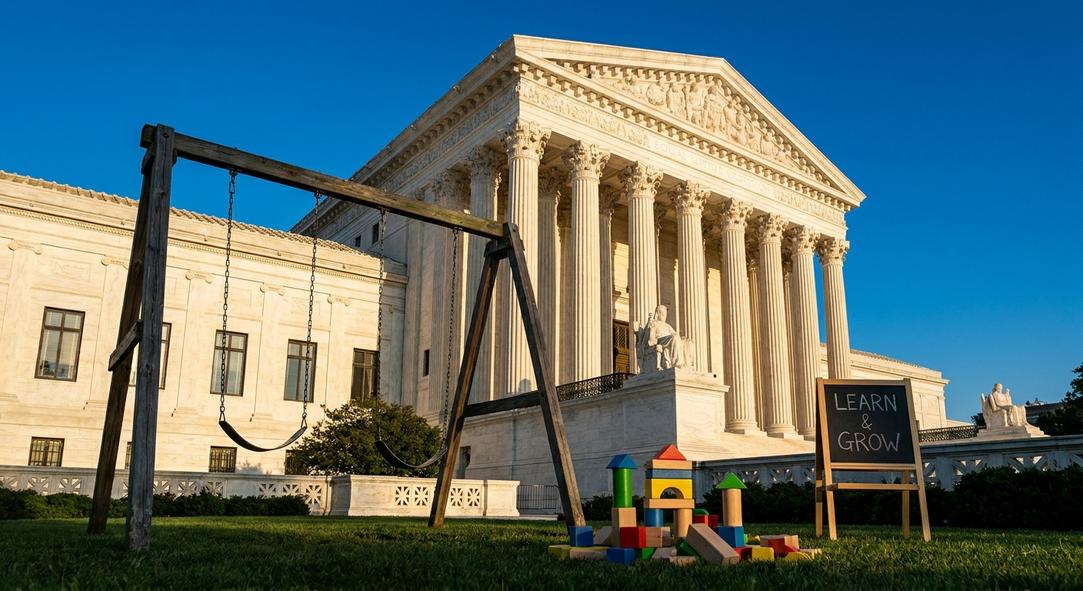
Yet, here we stand again, like travelers at a crossroads in a Robert Frost poem, pondering: If a playground can be funded, why not preschools? Beyond rhetorical flourishes, the answer involves the intricate examination of where education begins and church service ends.
Preschool Plight: Faith Learning or Learning Faith?
Religious preschools position themselves as educational institutions, deserving of the same support as their secular counterparts. They argue that they provide foundational learning experiences indistinguishable from those offered by non-religious preschools, apart from fluttering hymnals and morning prayers echoing through tiny classrooms. Are they places of early education or early indoctrination?
- Educational Parity: Proponents claim that these preschools are integral to community fabric, delivering education akin to reading, writing, and arithmetic—as vital as the air we breathe 📚.
- Potential Bias: Critics warn that public funding could blur the line of separation between church and state, akin to smudging ink on a sacred text.
This distinction forms the crux of the legal and moral debate: Is it constitutional to withhold public funds from religious schools based solely on their faith-orientated mission, or does this denial reveal a larger issue of bias masquerading as neutrality?
Modern Context: Echoes of the Past or Voices of the Future?
As we stand on the precipice of this legal decision, the question looms larger than it appears: How do we balance the scales of fairness without tilting towards favoritism? 🌐
Currently, societal attitudes toward funding religious preschools are as turbulent as clouds before a storm. Proponents see an opportunity to embrace diversity within educational funding, while critics caution against opening floodgates that may drown out secular values.
This case, thus, holds up a mirror reflecting not just our current legal boundaries but possibly the future contours of our constitutional freedoms. Indeed, it asks not just how we interpret laws, but what kind of society we envisage sitting at the crossroads of rights and religion. 🌅
“`